
Your baby's well-being starts in the gut
With a simple at-home kit and a smart dashboard, Novabiomica helps you understand your baby's gut microbiome and follow its evolution as they grow.
Image edited with AI
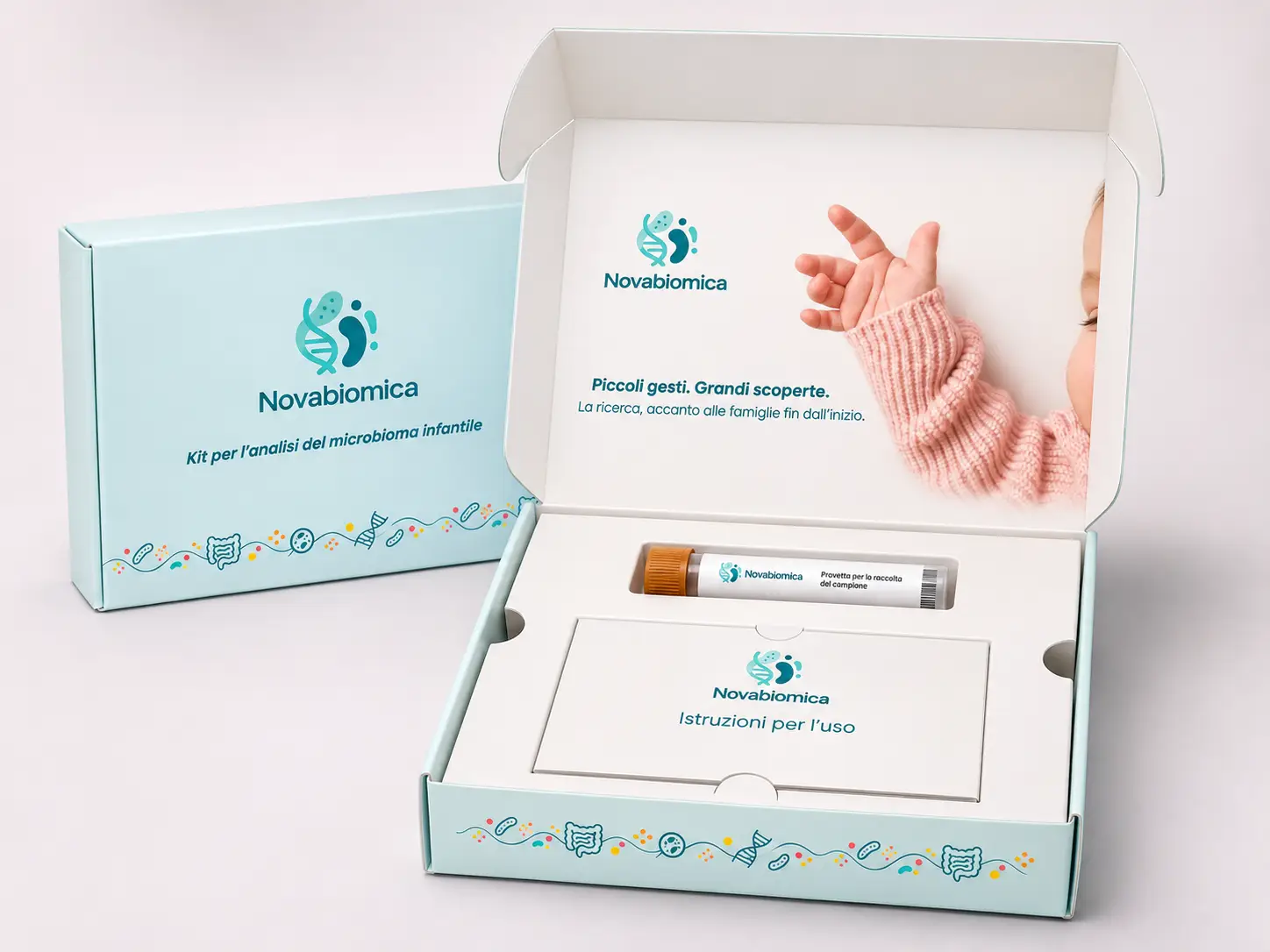
At-home sample
A simple collection, in just a few minutes
Advanced analysis
Microbial DNA sequencing in the lab
Clear results
Validated gut health indicators
Dedicated support
A team of experts for all your questions
Developed by a team with international experience in scientific research
Video coming soon
What's happening in your baby's tummy?
There's much more than what you can see.
In the first months, we constantly observe our baby's tummy: how they eat, how often they poop, its color and consistency, how it changes with breastfeeding, weaning, or after antibiotics.
But an important part of what happens in the gut can't be seen.
It's the gut microbiome: the ecosystem formed by billions of microorganisms that colonize the gut from the earliest months of life.
Why learn about the microbiome?
Because in the first months, it changes along with your baby.
A newborn's microbiome is an ecosystem still in development. Breastfeeding, diet, antibiotics, environment, and growth all contribute to gradually shaping its composition.
And these microorganisms aren't simply passengers in the gut: they use components from food, produce molecules, and interact with the gut environment and the developing immune system.
Learning about the microbiome means being able to observe a part of your baby's development that normally remains invisible.
Understand your baby's gut balance
The microbiome plays an important role during the first years of life. Learning about it helps you better understand your baby's development.
Observe the impact of diet and antibiotics
Discover how diet, antibiotics, and other factors can influence your baby's microbiome over time.
Follow its evolution
Track changes in the microbiome through the Novabiomica dashboard and compare results over time.
Get simple, personalized information
We turn complex genomic data into a clear, intuitive report designed to help you better understand your baby's microbiome.
Knowing which bacteria are there isn't enough.
Even bacteria of the same species can have different capabilities.
A microbiome analysis can identify which microorganisms are present and their abundance. But knowing their name is only part of the story.
Different strains of the same species can have different genetic traits and functional capabilities.
That's why Novabiomica goes beyond a simple list of bacteria: we also analyze the microbiome's potential functional capabilities to understand not just who's there, but also what functions it may be able to perform.
Who's there
Which microorganisms are present and in what abundance.
What they might do
Which potential functional capabilities are present.
Novabiomica makes visible what you normally can't see
From a small stool sample collected at home, Novabiomica analyzes thousands of pieces of information about your baby's gut microbiome.
The results are turned into an intuitive dashboard that helps you understand:
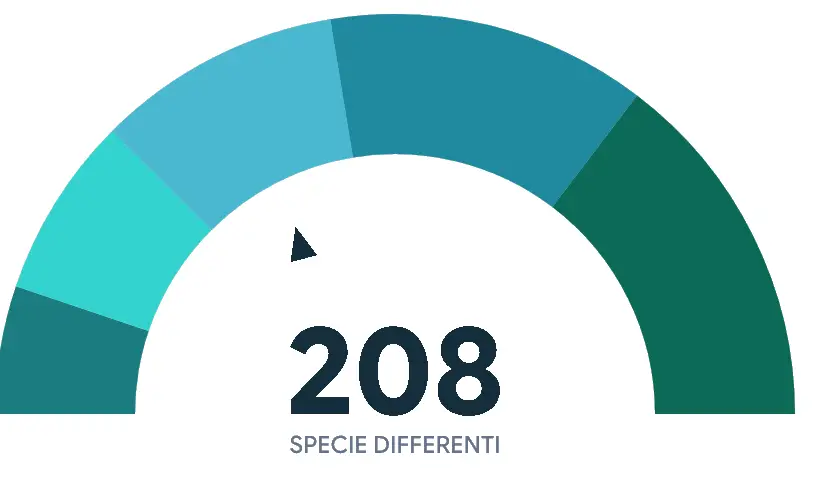
Alpha diversity
Who's there
Which microorganisms are present and in what abundance.
What it might do
Which potential functional capabilities are present.
What it means
How to read the results in light of the available scientific evidence.
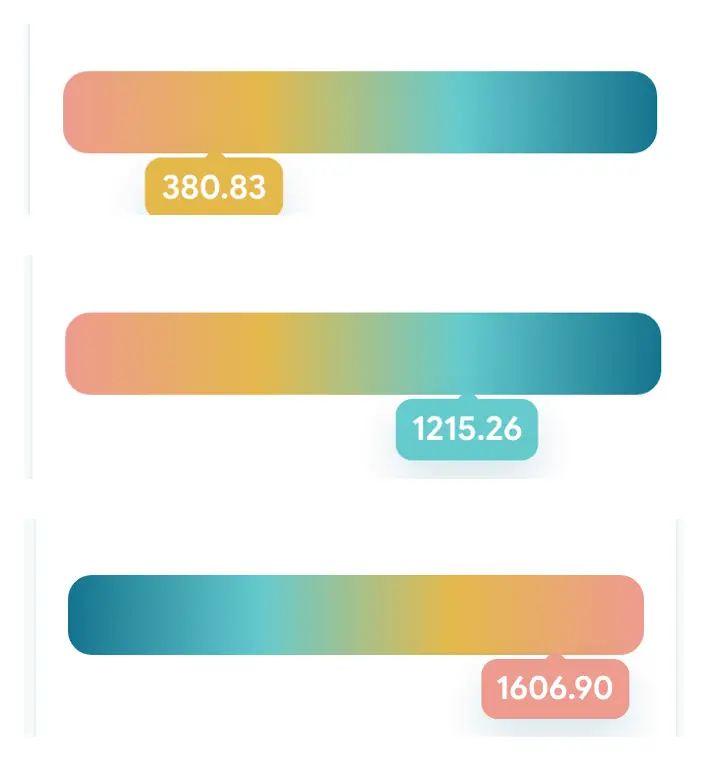
Butyrate · Propionate · Acetate
What to watch over time
How the microbiome changes as your baby grows.
What you see in the diaper tells part of the story. Novabiomica helps you learn about what you can't see.
Explore the dashboardWhat happens after the test?
From results to information you can use.
The value of an analysis isn't about having more data, but about understanding what it means for your baby, what might be worth exploring further, and what to watch over time.
The Novabiomica report highlights the most relevant features of the microbiome and makes them easy to understand, offering information that can become a starting point for a more informed conversation with your pediatrician or another qualified healthcare professional.

Breastfeeding and HMOs
Is your baby breastfed? Discover which microorganisms associated with HMO use are present and what potential genetic capabilities they have.

After antibiotics
Antibiotics can alter the gut microbiome. The analysis provides a snapshot of its composition and potential functional capabilities after treatment, and with analyses performed at different times, allows you to observe how it evolves.

During weaning
As new foods are introduced, the environment available to gut microorganisms also changes. Analyses performed at different times make it possible to observe how the microbiome evolves as the diet becomes more varied.

If you're considering a probiotic
Knowing which microorganisms are already present, their abundance, and some of their potential functional capabilities can provide more specific context to bring to your pediatrician or healthcare professional when considering a supplement.
Novabiomica doesn't prescribe probiotics: it helps you better understand your baby's starting microbiome before discussing its use with a professional.
Chief Scientific Officer – Novabiomica
Novabiomica is committed to always distinguishing between information and medical guidance. The goal isn't to provide definitive answers, but to make a complex scientific field more accessible.
More about us →
“Lorem ipsum dolor sit amet, consectetur adipiscing elit sed do eiusmod tempor incididunt ut labore et dolore magna aliqua.”
Tips and insights on your baby's gut health



Discover what's in your baby's tummy.
The microbiome in the first months is dynamic. By repeating the analysis at different times, you can observe how the gut ecosystem changes as your baby grows and during key moments, such as weaning or antibiotic treatment.
More context to understand. More information to ask the right questions. A microbiome story you can follow over time.
Everything you need to know about Novabiomica
The test provides information about the gut microbiome for informational purposes. It is not a diagnostic tool and does not replace the advice of a pediatrician or other healthcare professionals.

